03 November 2026
Why Vehicle Identity Protection Matters More Than Ever in the UK
Presented by @vehicleidentityprotectionnotes
Most drivers think of their car in terms of metal, glass, and rubber. They insure it, service it, and maybe fit a tracker for peace of mind. But there is a layer of ownership that is less tangible and far more vulnerable: the vehicle's identity itself. In the UK, your car's registration details, number plate, and DVLA records are the official proof that your car is yours. When those details get copied or stolen, the consequences can be time-consuming, expensive, and legally messy. That is where vehicle identity protection comes into the picture. It is not just a technical concept. It is a practical shield against a kind of fraud that is surprisingly common and often goes unnoticed until it is too late.
Number plate cloning, or car cloning as many people call it, is the most visible form of vehicle identity fraud. A criminal copies your registration mark onto an identical model of car, usually one that is the same colour and year. Then they drive that cloned car through ANPR cameras, speed traps, and even past law enforcement agencies without raising suspicion. The fines, congestion charge bills, and even criminal reports land on your doorstep. You have to prove you were elsewhere, that your plates were copied, and that the offence was not yours. That process can take weeks and often requires legal help. The growing use of ANPR cameras across UK Police forces and local councils means a cloned plate gets flagged more frequently now, but it also means the cloned vehicle is caught on camera more often too. That creates a lot of false evidence that you then have to unpick.
How Vehicle Identity Fraud Actually Happens
Vehicle identity fraud goes beyond just cloning a number plate. Some criminals steal a vehicle's entire identity. They take the vehicle registration number, the make, model, and even the VIN from a legitimate car, then apply it to a stolen vehicle of the same type. That stolen car then appears clean on databases, passes checks by unsuspecting buyers, and can be sold with fake vehicle documents. The original owner only finds out when they try to sell their own car and discover a duplicate exists, or when the police seize their car by mistake. Others use stolen identities to avoid paying congestion charges, tolls, or parking fines. The DVLA and law enforcement agencies have systems to detect this, but the fraud often relies on the gap between when the crime happens and when the owner finds out.
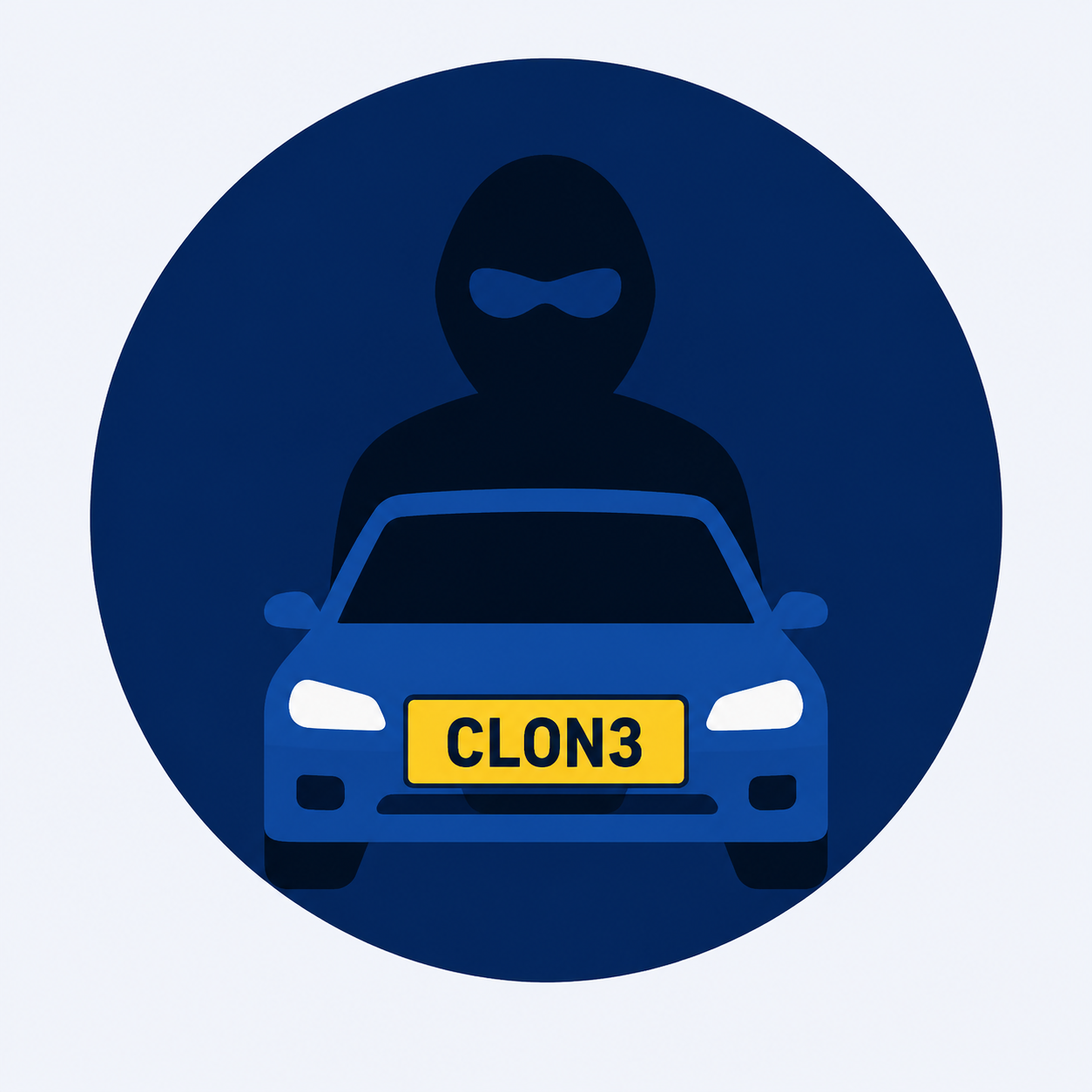
A data breach at a dealership, a stolen driving licence, or even a photo of your vehicle registration document left in the car can give criminals everything they need. Identity theft of this kind does not always start with your car. It can start with your post, your email, or a hacked account that stored your vehicle details. Once they have your vehicle registration and some basic information, they can generate a convincing set of cloned plates and documents in under an hour. The real challenge is that by the time you notice, the damage is already done.
Why Reactive Responses Are Not Enough
Most people only think about vehicle identity protection after they have been hit. They get a fine for a bus lane they never drove in, or a letter from the DVLA about a car they sold years ago. At that point, the fraud is already embedded in the system. You can report it to the police, contact the DVLA, and get new plates, but the cloned identity often stays active for months. The criminal just switches to another plate or another car. Reactive fraud prevention is slow and frustrating. It relies on you noticing something wrong and then navigating a maze of agencies.
That is why proactive measures are gaining traction. Services that offer clone detection and real-time alerts give you a chance to catch the misuse early. Instead of waiting for a penalty notice to arrive, you get a notification when your vehicle registration is checked somewhere unexpected. For example, if your car is parked at home but the ANPR cameras read your plates at a petrol station thirty miles away, that mismatch triggers an alert. You can then act before the fines pile up. This kind of secure verification bridges the gap between the physical car and the digital record. It does not replace the DVLA's systems. It adds a layer of personal oversight that the official databases cannot provide on their own.
The Role of the Vehicle Registration Verification Network
Networks that link vehicle registration data across multiple sources are becoming a practical tool for fraud prevention. A Vehicle Registration Verification Network, such as the one behind Protect-a-Plate, connects number plate recognition data from various points across the UK. When your plate is scanned, the system cross-references it against expected locations and patterns. If something does not match, you get a news alert or a notification. This is not about surveillance. It is about giving the legitimate owner a way to spot when their identity is being used without their permission.

For businesses that operate fleets, this kind of monitoring is even more critical. A cloned plate on a delivery van can lead to multiple penalty charges across different cities. Sorting that out takes admin time and legal costs. Real-time alerts on fleet vehicles help fleet managers isolate problems quickly. They can see which vehicle registration numbers are being flagged and compare that against their own tracking data. The combination of vehicle identity protection and operational tracking means fraud gets caught in hours rather than weeks.
Practical Steps to Protect Your Vehicle Identity
You do not need to be a security expert to reduce your risk. A few habits make a real difference. Keep your vehicle documents in a safe place, not in the car. Shred any paperwork that shows your vehicle registration number before you throw it away. When you sell a car, make sure the DVLA records are updated immediately. Those steps limit the amount of personal data a criminal can gather. But the most effective step is to use a service that monitors your plate's activity. Clone detection through a verification network gives you eyes on your vehicle identity even when you are not driving.
It is also worth understanding how ANPR cameras work and where they store their data. Many people think that if they have done nothing wrong, they have nothing to worry about. But with vehicle identity fraud, you are not the target of the investigation. You are the victim of someone else's crime. The evidence collected by cameras is used against your identity, not against the criminal. That is why vehicle identity protection is not about hiding or avoiding detection. It is about making sure the system holds the right person responsible.
What to Do If You Suspect Cloning
If you get a penalty charge for a place you never visited, do not just pay it. Contact the DVLA and the issuing authority immediately. Ask for photographic evidence. Cloned plates often have subtle differences in font or spacing, but the camera image may show the vehicle's make and model. If that does not match your car, you have a clear case. Report it to the UK Police on 101 and get a crime reference number. Then contact a service like Protect-a-Plate to set up monitoring on your new plates. The faster you act, the less damage the cloned identity can do.

Vehicle identity fraud is not going away. As more enforcement relies on number plate recognition and automated systems, the incentive for criminals to clone identities only grows. The tools to fight it are improving, but they work best when the vehicle owner is part of the defence. Secure verification, real-time alerts, and a basic understanding of how identity theft targets your car can turn you from a passive victim into an active participant in your own fraud prevention. That shift in mindset is what makes vehicle identity protection more than just a product or a service. It is a practical habit for anyone who owns a car in the UK today.